


RESEARCH & PUBLICATIONS
With an international academic background across Yonsei University, the National University of Singapore, the University of Amsterdam and The University of Queensland, Yun holds degrees in management at bachelor’s, master’s and PhD levels. His work focuses on business and management, human resources, organisational studies, strategy and sustainability. He also serves on journal editorial boards and as a reviewer for leading academic journals.
Journal Articles
Human Resources · Organisational Studies · Business & Strategy · Globalisation · Sustainability
Coffee and Sustainability in Tea-Drinking Societies: Cultural Path Dependence in China and Korea
- Abstract: This study develops a theoretical framework to explain the different tracks of coffee consumption in China and South Korea, both of which are historically characterized by tea-dominant cultures, through the lens of cultural path dependence. Building on theories of institutional path dependence and cultural embeddedness, the paper introduces the Cultural Path Dependence Construct (CPDC), a second-order construct comprising ritual embeddedness, identity centrality, and institutional reinforcement. The CPDC framework captures how historically constituted cultural-institutional pathways act as filters that shape consumer receptivity to sustainability narratives. Through comparative analysis, the study theorizes China’s enduring tea dominance as a case of cultural lock-in and South Korea’s rapid embrace of coffee as a path breakthrough. The findings suggest that strong CPDCs limit the mainstreaming of sustainable innovations by requiring culturally congruent translation, while more fluid CPDCs allow for direct adoption. Based on this framework, a set of testable propositions is presented, along with a strategic matrix contrasting sustainable marketing approaches in locked-in versus breakthrough markets. The study offers theoretical contributions by linking path dependence with sustainable consumption to provide practical insights for firms aiming to localize sustainability messaging in culturally divergent markets. Meanwhile, the CPDC framework offers a new tool for understanding how cultural paths interact the success of sustainability-oriented market innovations.
- Keywords: Path Dependence, Cultural Embeddedness, Sustainable Consumption, Coffee Market, Tea Culture.
▪ Citation: Zeng, Y., Zhu, K., Han, M., & Cao, R. (2026). Coffee and Sustainability in Tea-Drinking Societies: Cultural Path Dependence in China and Korea. Journal of Current Social Issues Studies, 3(1), 58-69. https://doi.org/10.71113/JCSIS.v3i1.562
Short-term thinking, long-term costs: How managerial myopia undermines green innovation
- Abstract: Purpose: This study investigates the impact of managerial myopia on green innovation in Chinese listed companies from 2001 to 2021, focusing on how short-termism undermines sustainable innovation at both firm and industry levels.
Design/methodology/approach: Utilising Management Discussion and Analysis (MD&A) textual analysis and corporate patent data, we employ high-dimensional fixed-effects and robustness tests to assess the relationship between managerial myopia and green innovation. Heterogeneity analysis and mediation models explore variations across firm types and mediating mechanisms, including R&D investment, digital transformation and environmental, social and governance (ESG) management.
Findings/results: Results confirm that managerial myopia significantly inhibits green innovation, with stronger effects in non-state-owned enterprises (non-SOEs), non-heavy polluting firms and non-CEO-duality firms. At the industry level, managerial myopia indirectly suppresses green innovation through reduced R&D investment, limited digital transformation and weaker ESG management, as validated by mediation analysis.
Practical implications: The findings offer policymakers and corporate leaders’ insights into aligning managerial incentives with long-term environmental and economic goals. Encouraging sustainable focus in non-SOEs and enhancing R&D and ESG practices could mitigate the adverse effects of short-termism on green innovation.
Originality/value: This research integrates MD&A textual analysis with patent-based metrics to provide a novel perspective on managerial myopia’s impact on green innovation in an emerging market context. It elucidates nuanced mechanisms – R&D, digital transformation and ESG management – through which short-termism disrupts sustainability, contributing to the literature on corporate governance and environmental innovation. - Keywords: managerial myopia; green innovation; digital transformation; ESG management; R&D investment.
▪ Citation: Zhou, M., Yang, S., Qiu, X., Zeng, Y., & Zhu, K. (2026). Short-term thinking, long-term costs: How managerial myopia undermines green innovation. South African Journal of Business Management, 57(1). https://doi.org/10.4102/sajbm.v57i1.5337
The impact of AI pilot zones on market competition: Causal insights from policy implementation
- Abstract: Purpose: This study investigates the impact of managerial myopia on green innovation in Chinese listed companies from 2001 to 2021, focusing on how short-termism undermines sustainable innovation at both firm and industry levels.Design/methodology/approach: Utilising Management Discussion and Analysis (MD&A) textual analysis and corporate patent data, we employ high-dimensional fixed-effects and robustness tests to assess the relationship between managerial myopia and green innovation. Heterogeneity analysis and mediation models explore variations across firm types and mediating mechanisms, including R&D investment, digital transformation and environmental, social and governance (ESG) management.Findings/results: Results confirm that managerial myopia significantly inhibits green innovation, with stronger effects in non-state-owned enterprises (non-SOEs), non-heavy polluting firms and non-CEO-duality firms. At the industry level, managerial myopia indirectly suppresses green innovation through reduced R&D investment, limited digital transformation and weaker ESG management, as validated by mediation analysis.Practical implications: The findings offer policymakers and corporate leaders’ insights into aligning managerial incentives with long-term environmental and economic goals. Encouraging sustainable focus in non-SOEs and enhancing R&D and ESG practices could mitigate the adverse effects of short-termism on green innovation.Originality/value: This research integrates MD&A textual analysis with patent-based metrics to provide a novel perspective on managerial myopia’s impact on green innovation in an emerging market context. It elucidates nuanced mechanisms – R&D, digital transformation and ESG management – through which short-termism disrupts sustainability, contributing to the literature on corporate governance and environmental innovation.
- Keywords: managerial myopia; green innovation; digital transformation; ESG management; R&D investment.
▪ Citation: Zhu, K., Qiu, X., Yang, S., Zeng, Y., & Zhang, X. (2025). The impact of AI pilot zones on market competition: Causal insights from policy implementation. Oeconomia Copernicana, 16(2), 643–688. https://doi.org/10.24136/oc.3658
Strategic Marketing Analysis of NIO: A Case Study on Electric Vehicle Industry in China
- Abstract: Purpose: The global economy was further weakened after the Covid-19, while the New Energy Vehicle (NEV) industry has shown strong growth and resilience. Among numerous NEV companies, NIO, headquartered in Shanghai, stands out in the market with its innovative marketing approaches. This paper employs a blended research methodology involving semi-structured interviews and longitudinal data analysis to delve into NIO's marketing strategy. The case study encompasses multifaceted explorations: firstly, a comprehensive assessment of NIO's marketing strategy is conducted, encompassing external environmental analysis, internal resource evaluation, and core competency identification. Secondly, NIO's core marketing methods are critically examined, covering marketing mix, market segmentation, STP (Segmentation, Targeting, Positioning) strategy, strategic partnerships, and Corporate Social Responsibility (CSR) initiatives. Thirdly, the research highlights challenges presently faced by NIO's current marketing strategy, and provides pragmatic recommendations. The innovation of the article is that it provides a specific and practical supplement to the market research of the new energy vehicle industry by a case study, which is of great significance for the sustainable development of the electric vehicle industry and environmental protection. Furthermore, the exploration of NIO's market strategy offers fresh perspectives for other enterprises within the same industry seeking to navigate the market landscape.
- Keywords: NIO, Electric Vehicle, New Energy, Strategic Marketing, Marketing Analysis, Strategic Management.
▪ Citation: Zeng, Y., Yao, X., Yang, S., Cao, R. (2025). Strategic Marketing Analysis of NIO: A Case Study on Electric Vehicle Industry in China. Journal of Commercial Biotechnology, 30(2), 410-425. https://doi.org/10.5912/jcb2148
Chronicle analysis of new public management and performance-based budgeting: Delusion and existence
- Abstract: Purpose: Over the past several decades, new public management (NPM) and performance-based budgeting (PBB) have developed as major standards in public sector management, accentuation efficiency, responsibility, and outcome-driven resource distribution. The work efficiently investigates the connection of NPM and PBB within a Chinese ministry, analyzing their consequences for acquaintance conception, dispersion, and application in the background of public administration reorganization. This study uses Incident Historical Investigation to examine the ways in which the culture of the company, financial position, relationships between governments, and leadership traits impact provincial PBB spread in China in order to more fully comprehend the processes of PBB dissemination. According to the outcomes, (1) distinctive government officials have different motivations for adopting PBB; (2) PBB upgrades are mainly spread within bottom-up enticement, with provincial concurrence and fundamental campaigning playing a minor role; (3) jurisdictions with higher financial circumstances are more probable to implement PBB reforms; and (4) a culture that promotes reforms together with accountability can promote the spread of PBB improvements. Therefore, this study holds considerable significance for improving both the theoretical understanding and practical execution of the budgeting process: it gives governmental politicians and legislators important information on how to support PBB innovations and the spread of policies among mid-level authorities, especially in the context of a unitary state.
- Keywords: New public management, Performance-based budgeting, Pragmatic truth, Pragmatic illusion, Chinese public management.
▪ Citation: Sou, K., Qiao, C., Gu, M., Gao, Z., & Zeng, Y. (2025). Chronicle analysis of new public management and performance-based budgeting: Delusion and existence. Journal of the Knowledge Economy. https://doi.org/10.1007/s13132-025-02739-0
Building a Sustainable Mentorship Support Model in Manufacturing: Integrating Recruitment-Training Alignment and Stakeholder Engagement
- Abstract: This study aims at building a sustainable mentorship support model in the manufacturing industry, integrated recruitment-training alignment with stakeholder engagement. It highlights that traditional mentorship systems struggle to meet the contemporary needs of manufacturing employees, particularly in terms of skills and emotional connections. The study employs a mixed-methods approach, combining qualitative and quantitative analysis to propose a demand-supply-sustainability ternary model intended to optimize resource allocation and enhance the sustainability of mentorship programs. The findings provide an actionable framework and strategies for mentorship initiatives in manufacturing, while enriching the theoretical content of mentorship in specific context.
- Keywords: Mentorship Programs (MPs), Mentorship Support Model (MSM), Recruitment-Training Alignment, Education for Sustainability, Stakeholder Engagement.
▪ Citation: Yun Zeng, Simin Yang, & Wei Hsiang Hsu. (2025). Building a Sustainable Mentorship Support Model in Manufacturing: Integrating Recruitment-Training Alignment and Stakeholder Engagement. Educational Administration: Theory and Practice, 31(1), 579–586. https://doi.org/10.53555/kuey.v31i1.9659
Research on the impact of foreign direct investment quality on green total factor productivity: Evidence from China
- Abstract: Green total factor productivity (GTFP) is an important indicator to measure the green development of the economy. In the context of increasing investment promotion, improving GTFP is an important means of promoting sustainable development. It is also an important way to promote low-carbon development. Based on the panel data of 29 provinces and cities in China (excluding Xinjiang, Tibet, Hong Kong, Macao and Taiwan) from 2011 to 2020, this paper adopts the entropy method to construct a comprehensive index of the quality of foreign direct investment (QFDI) and employs the systematic generalized method of moments (GMM) to estimate the impact of QFDI on GTFP. Meanwhile, this paper also uses the threshold model for further testing. The results show that QFDI has a significant positive effect on China’s GTFP. In terms of dimensions, foreign capital with high technology spillover ability, high management level and high profitability has a significant promoting effect on GTFP. However, the positive effect of foreign capital scale is weak. And foreign capital export capacity has no significant effect on GTFP. The impact of QFDI on GTFP has a single threshold effect based on human capital and R&D investment. From a regional perspective, QFDI has a greater role in promoting GTFP in coastal areas than in inland areas. This paper provides important suggestions for policymakers to improve foreign investment policies and promote green development.
- Keywords: quality of foreign direct, investmentgreen total factor productivity, sustainable development, green development, GMM.
▪ Citation: Guo, Y., Song, H., Luo, Z., Zeng, Y., Işık, C., & Yan, J. (2024). Research on the impact of foreign direct investment quality on green total factor productivity: Evidence from China. Polish Journal of Environmental Studies, 33(4), 4573–4584. https://doi.org/10.15244/pjoes/178453
Natural resources extraction of RCEP trade bloc: Examining geopolitical risk and economic situation
- Abstract: Natural resource extraction is a critical driver of many countries' economic growth and development. Given the significance of resource extraction for RCEP countries, this study investigates the effects of natural resource rent on the international trade of RCEP members. This paper uses energy efficiency, GDP and geopolitical risk as control variables. Resources extraction, geopolitical risk and economic situation are the key variables of interest. The findings of this study highlight the important role of natural resource rents, geopolitical risk, GDP, and energy efficiency in shaping international trade patterns within the RCEP trade bloc. The detrimental impact of oil rent on international trade has been justified by the results obtained from the quantile regression analysis for each quantile. The study emphasizes the importance of policymakers and businesses understanding the complex interactions between these factors and their implications for international trade. The study also provides relevant policy implications for RCEP economies following their resources sector, economic structure, and geopolitical risk.
- Keywords: Natural resources, Geopolitical risk, RCEP, International Trade, Policymakers.
▪ Citation: Guo, Y., Zheng, H., Zeng, Y., Fan, W., Albahooth, B., & Bhuiyan, R. A. (2023). Natural resources extraction of RCEP trade bloc: Examining geopolitical risk and economic situation. Resources Policy, 86(104227), 104227. https://doi.org/10.1016/j.resourpol.2023.104227
Conference Articles
Leadership · Talent Development · Digital Learning · Organisational Development
Strategic Leadership, Digital Learning, and Organizational Ecosystems: Evidence from Asian Multinational Firms
- Abstract: Digital transformation has become a strategic imperative for multinational corporations (MNCs), particularly in Asia where rapid technological advancement, institutional diversity, and intensified global competition reshape organizational capabilities. While existing studies often examine strategic leadership, organizational learning, and ecosystem participation independently, limited research integrates these dimensions into a coherent analytical perspective within Asian multinational contexts. This study addresses this gap by conducting a systematic integrative review of 30 peer-reviewed journal articles and scholarly publications published between 2022 and 2025. Through thematic coding and cross-study comparison, the research synthesizes current evidence and develops an optimized and integrated conceptual framework linking strategic leadership, digital learning, and organizational ecosystems. The findings indicate that strategic leadership—characterized by digital vision, technological orientation, adaptive governance, and ethical stewardship—plays a central role in guiding digital transformation. Digital learning, supported by artificial intelligence, analytics, and platform-based learning systems, emerges as a dynamic capability that mediates the relationship between leadership competencies and organizational outcomes. Moreover, organizational ecosystems function as collaborative networks that amplify knowledge exchange, innovation, and cross-organizational learning. By integrating these elements into a systemic framework, this study advances theoretical understanding of leadership-learning-ecosystem interactions and offers practical guidance for multinational firms seeking to build strategic learning capabilities and coordinate digital ecosystems in the process of digital transformation.
- Keywords: Digital transformation, Strategic leadership, Digital learning, Organizational ecosystems, Multinational corporations, Artificial intelligence, Organizational learning, Innovation networks.
▪ Citation: Zeng, Y., Bin, T., Cao, R. (2026). Strategic Leadership, Digital Learning, and Organizational Ecosystems: Evidence from Asian Multinational Firms. Advances in Social Science, Education and Humanities Research. Atlantis Press SARL. Accepted
Is outward bound training a game or a show: Based on stakeholder perspectives of the enterprise
- Abstract: In the background of rising global competition, enterprises focus more and more on talent development, and outward bound training (OBT) is widely used as a tool for corporate training. This study examines the deviation in the performance of outward bound training with different stakeholders and the challenges in its design and implementation. The study participants included new employees and management involved in outward bound training, and 35 participants were involved in data collection through semi-structured interviews and 242 participants through structured questionnaires. The grounded theory was used to analyse the data from the interview information to understand the demands of different stakeholders and their roles in the training. The results found that the improvement of the outward bound training method had a positive effect on employee satisfaction, and the interview results proved that the effectiveness of outward bound training deviated significantly depending on the target group. So trainers needed to find a balance between the sense of engagement of new employees and the expectations of management. In addition, the study highlights the core goals of outward bound training and what to pay attention to. Finally, this study enriches the meaning of outward bound training and provides more quantitative support for the design and implementation of outward bound training in enterprises. It also provides an outward bound training decision model to help companies better meet the demands of different stakeholders, thus improving the effectiveness of training and achieving sustainable development of individuals and organisation.
- Keywords: Outward bound training (OBT), Training, Stakeholder, Gamification, Performance.
▪ Citation: Zeng, Y., Guo, Y., Yang, S., Hsu, W. (2025). Is outward bound training a game or a show: Based on stakeholder perspectives of the enterprise. SHS Web of Conferences, 219, 01001. https://doi.org/10.1051/shsconf/202521901001
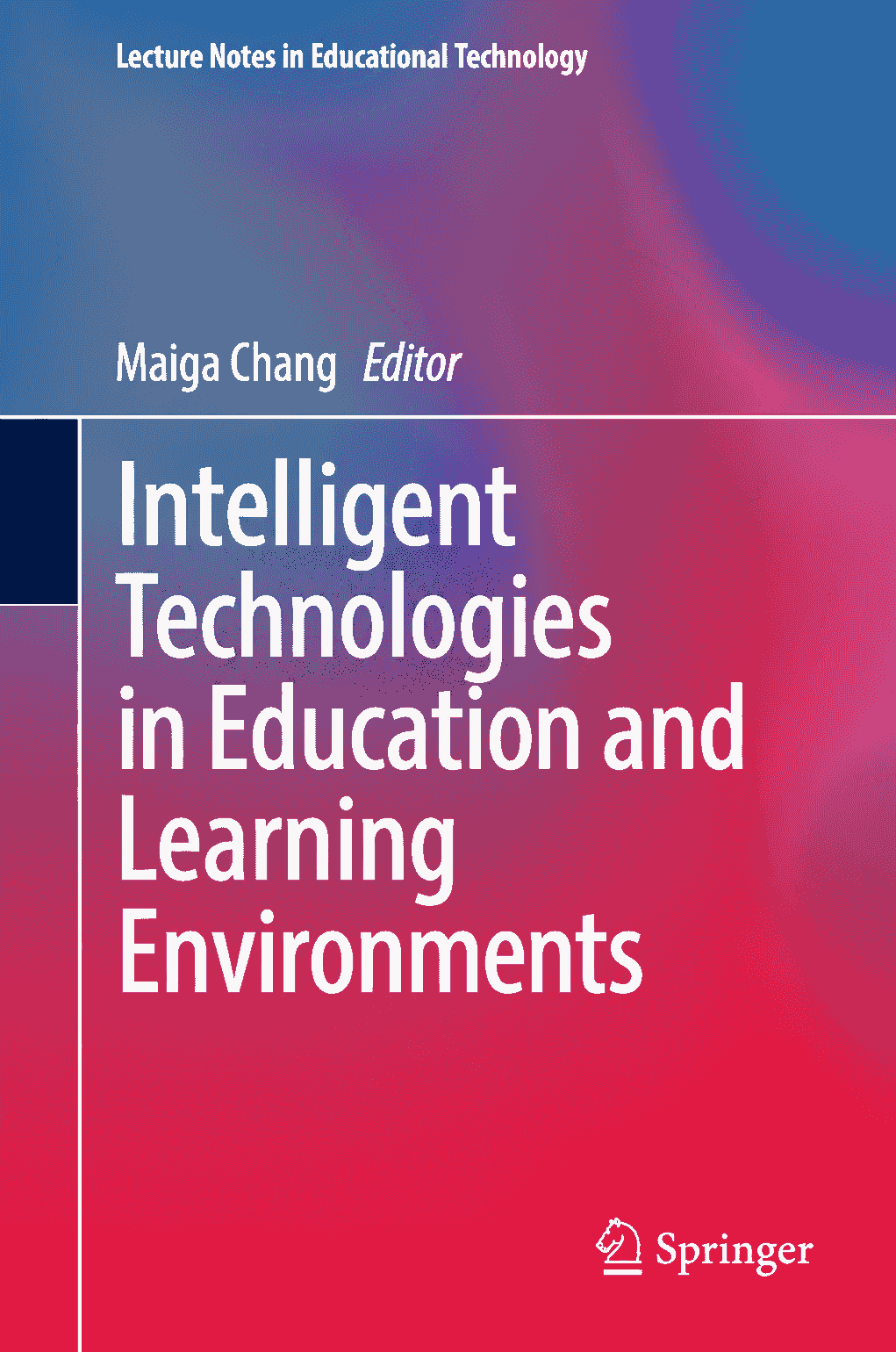
Intelligent Technologies in Education and Learning Environments
Zeng, Y., Cao, R., Yang, S. (2026). Constructivist Education in Technology-Enhanced Contexts: Designing Thematic and Differentiated Learning Experiences. Lecture Notes in Educational Technology. Springer.
IDEAS BECOME IMPACT.
Research matters most when it connects ideas with real-world challenges. Let’s explore new questions, exchange perspectives, and create meaningful impact together.

© 2026 Yun Zeng. All rights reserved.
Research with curiosity. Lead with impact.